

Brand-Funded Access: The New Value Exchange Between Brands, Content Owners and Audiences
For decades, brand partnerships in sport, entertainment and media have been built around exposure.
A logo on a shirt. A board at the side of a pitch. A pre-roll before a live stream. A campaign wrapped around a piece of content.
At the top end of the market, that model still has power. The biggest properties can command premium fees because they offer scale, prestige, cultural relevance and association that brands are willing to pay for.
But across much of the market, the economics are becoming harder to justify. Brands are being asked to make partnership budgets work harder, with clearer evidence of who they reached, how audiences engaged, and what value was created. Content owners need new ways to grow revenue without adding friction. Audiences are more fragmented, more selective, and more likely to engage with content wherever they discover it. And distributors, from publishers and creators to athletes and brand channels, want to participate in the value they help create.
The opportunity now is to connect all four.
Content Was Never Really Free
Premium content is under pressure.
AI will make more content easier and cheaper to produce. But more content does not mean more attention, more revenue, or better economics for rights owners.
If anything, as content supply increases, the value of audience attention, premium rights and direct monetization becomes even more important. I wrote recently about the monetization gap reshaping the rights economy; brand-funded access is one of the ways that gap can start to close.
Advertising remains a powerful part of the media economy. The problem is not that advertising has disappeared. The problem is that advertising alone cannot carry every piece of premium content.
That does not mean audiences are unwilling to exchange value for content. They already do.
Even when audiences do not pay directly, value is still being exchanged: attention, data, permission, advertising exposure or platform economics.
The idea that content is “free” has always been misleading. The value exchange exists; it just is not always transparent, visible or controlled by the audience.
The next model has to make that exchange more transparent, more measurable and more material for every participant in the content economy: audiences, brands, content owners and distribution partners.
Audiences Have Moved On
The way audiences discover and access content has changed.
People no longer move through a simple, linear journey from campaign to platform to content. They discover what they want through social posts, creators, athletes, publishers, newsletters, communities, search, messaging groups and brand channels.
Demand is generated everywhere.
But commercial models have not always kept up. Audiences increasingly resist friction. They do not want to download another app, create another account, commit to another subscription, or sit through irrelevant advertising just to access one piece of content they care about.
At the same time, audiences are not rejecting value exchange. They are rejecting value exchanges that are unclear, irrelevant or not worth it.
We already know fans are willing to exchange value when the content matters enough. World Supercross generated more than $500,000 from around 23,000 fans accessing content using Recast.
The question is how much more value could be unlocked if audiences had more ways to access that same content.
Some fans will pay directly. Others may access it without paying directly through a transparent brand-funded exchange, whether that means sharing permission, joining a loyalty programme, purchasing a product, using a service or completing another agreed action.
That is not “free” content in the traditional sense.
It is a more transparent exchange of value.
From Exposure to Exchange
This is where brands can play a different role.
Traditional sponsorship asks brands to pay for association, exposure and awareness. Sometimes that is enough. But as budgets come under pressure, the question is changing.
It is no longer only: “How many people saw us?”
It is increasingly: “Who are those people, what do they care about, and how do we build a relationship with them?”
Exposure can create awareness, but it does not always create a direct relationship. It does not always tell a brand who engaged, where demand came from, or what happened next.
This is where Recast enables a more direct exchange.
A brand can subsidisz or fully fund access to premium content in exchange for measurable engagement, first-party opt-in data or another agreed audience action.
That might mean a user shares permission, joins a loyalty programme, purchases a product, uses a service, answers a question or completes another agreed action.
The audience understands what they are exchanging. The brand receives a measurable outcome. The content owner is paid for the access delivered. And the brand becomes part of the value exchange, not just the messaging around it.
Access Can Travel With the Content
The bigger shift is not simply that a brand can fund access.
It is that the access offer, the brand association and the commercial rules can travel with the content wherever demand is created.
That might be on a publisher site, through a creator link, on a brand channel, from an athlete’s audience, or on the content owner’s own platform.
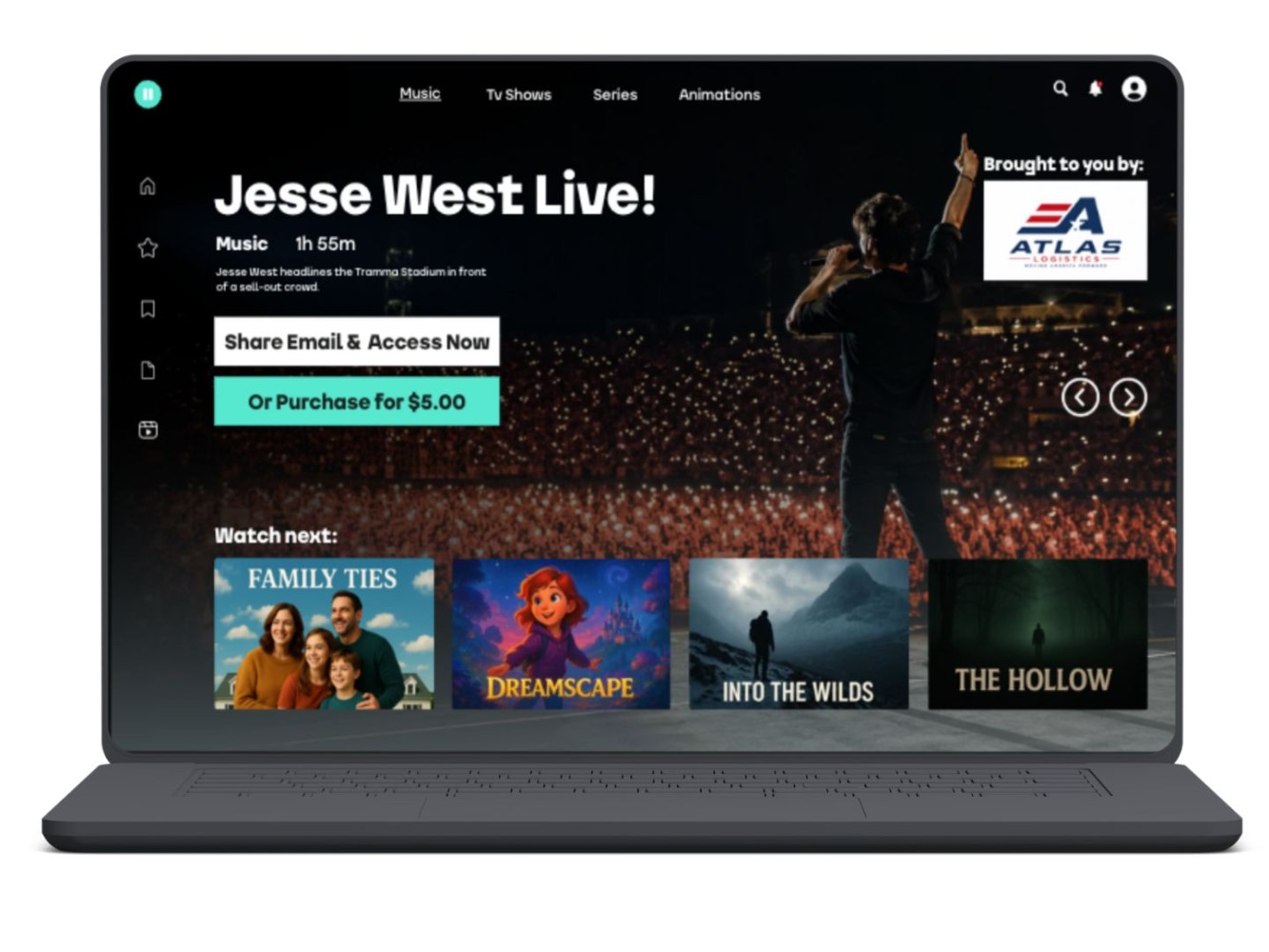
That means the brand can meet the audience at the point of intent, not only at the point of destination.
Recast is built for that reality.
Access, payment, entitlement, data capture and revenue share can move with the content. The commercial rules are not locked to one platform. They can travel wherever the content is approved to appear.
In that model, every approved destination becomes part of the distribution network. A brand can fund access across that network, so its association travels with the content wherever demand is created. A brand can also become a distributor itself, hosting or promoting premium content through its own channels and participating in the value created from the transactions it helps generate.
That creates a new content commerce opportunity.
Brands can participate in premium content distribution without needing to become traditional rights buyers, broadcasters or licensees. They can fund, reward or subsidise access around specific audience behaviours, connecting content access to commerce, loyalty and customer acquisition without forcing the content owner to give up control of the rights, pricing or audience experience.
It allows brands to move from advertising around content to participating in how content is accessed, distributed and monetized.
Recast Monetizes Intent
For content owners, brand-funded access opens another route to revenue.
It allows them to bring brands into the transaction itself, not just the marketing around it.
Not every audience relationship should be forced into the same model. Some audiences are already served through subscriptions or memberships. Others will pay for a single event, film or piece of content. Others will engage because a brand has made access free, subsidised or rewarded.
The commercial model should be flexible enough to support those behaviours without forcing every interaction into another subscription.
Advertising monetizes reach.
Subscriptions monetize loyalty.
Recast monetizes intent.
Brand-funded access makes that intent frictionless.
The brand is no longer interrupting the experience. It is enabling it.
That is the new role brands can play in premium content: not just appearing around the experience, but helping audiences access it in a way that is relevant, measurable and permission-based.
It allows an audience to act on demand the moment it appears, without always having to pay directly themselves. It allows a brand to fund that access in a way that creates measurable value. And it allows the content owner to capture value from demand wherever it is generated.
That is the infrastructure Recast provides.
The New Value Exchange
The future of brand partnerships will not be defined only by who can buy the biggest placement. It will be defined by who can create the most valuable exchange across the content economy.
For audiences, brand-funded access creates easier access to premium content. For content owners, it opens another route to revenue. For brands, it turns content partnership spend into a more measurable path to engagement, customer relationships and return on investment. And for publishers, creators, athletes and other distribution partners, it creates a way to be rewarded for helping audiences discover and access brand-funded content.
That is the shift from exposure to access.
From awareness to relationship.
From sponsorship as visibility to sponsorship as participation.
This is not simply a better sponsorship model. It is a better economic model for content where everybody wins.
The infrastructure now exists to make this possible.
And for brands, content owners and distribution partners ready to rethink how content, commerce and partnerships come together, the opportunity is immediate.
