
"Your Audience". "Your Channel". Your Business?
Social platforms helped build the following. Owning the customer relationship and connecting the economics is what comes next.
The Language of Ownership
We call them our channels.
Our YouTube channel. Our Instagram audience. Our Facebook community.
The language implies ownership. The underlying relationship offers considerably less.
Open Instagram or Facebook and scroll through your feed. How much comes from people you chose to follow? How much comes from accounts the platform has chosen to show you?
Now consider the same question from the other side. If somebody follows you, how much of your work will they actually see?
The platform decides. You can spend years building a following without securing a reliable way to reach it. You may then have to pay to reach the very people who asked to hear from you.
The platform owns the destination. It controls discovery, access to your following and the terms under which your content can be monetised. You supply the work and help attract the audience, but following you there does not establish a direct customer relationship. That requires giving your followers a reason and a way to connect with you directly beyond the platform.
Social platforms have created extraordinary opportunities for creators, talent and content owners. But access to an audience on somebody else’s terms is different from control of a customer relationship.
The industry has become comfortable calling audiences its own while allowing somebody else to decide whether it can reach them.
The More We Chase Reach, the More We Feed the Imbalance
There is an irony in the industry’s pursuit of social reach.
Every creator, artist and rights owner is encouraged to publish more, attract more followers and generate more views. Collectively, that activity gives platforms more content, more reasons for audiences to stay and more choice over whose work they surface.
For the individual, the same activity increases competition for attention. Everyone produces more to improve their position, while collectively making attention harder to secure.
The platform benefits from the growing supply. The people supplying it have no corresponding guarantee of greater reach or revenue.
The pursuit of social reach can therefore deepen dependence on the very platforms making that audience harder to reach.
As people follow more accounts, each account competes with more sources for their attention. A creator’s follower count can keep rising without a corresponding increase in the attention or revenue available to their business.
AI will accelerate this imbalance by increasing the volume of content competing for attention. The algorithm’s objective is to keep audiences engaged within its environment. Preserving your reach or sustaining your business is not its obligation.
For some, this becomes a search for lightning: that one release the algorithm picks up and puts in front of millions. For others, reach is more consistent, but still insufficient to support the business behind the content. Both face pressure to keep producing more.
The response cannot simply be to produce more. Each moment of attention should also help build something that lasts beyond the feed: a direct customer relationship and a reason to return to your own channel.
What Owning a Channel Should Mean
Across the industry, companies are promising to help talent build “media businesses they own” on YouTube. Yet the foundations of those businesses remain under the platform’s control.
That is platform dependence dressed as ownership.
Producing premium content costs money. For all but a handful, the days of assuming licensing deals and platform revenues will cover those costs are gone.
If the next licence deal doesn’t come through or your reach or revenue on the platform falls short, how will you pay to make the next thing? How will your financiers earn a return?
You need a way to monetise your content directly, on terms you control, wherever your audiences are.
Direct-to-consumer should mean a direct commercial relationship with the consumer, not simply the ability to publish without a broadcaster.
Your social account is a presence on someone else’s platform. Your own channel is a business you control, where you can monetise both what you create and what you choose to distribute.
That channel can sit on your own domain, giving you control over the viewing experience, the offers you make, which brands appear alongside your content and how you build relationships with customers.
A podcast can release an exclusive interview with a high-profile guest. A comedian can sell a special or livestream a show. A musician can offer an exclusive performance or release a concert film online after its theatrical run. A sports organisation can offer live coverage alongside original programming.
Free clips, interviews and highlights can build awareness on social platforms. The same promotion that fills a venue can sell digital tickets to fans around the world, without the same limits on capacity or geography.
Each sale is a chance to build a direct customer relationship that can support future releases, ticket sales and merchandise. It can also help sponsors see what their investment drives.
But the channel’s potential shouldn’t be limited to the content its owner produces. Nor should its own content be confined to audiences visiting its own domain.
A musician could offer festival performances alongside their own documentary. A golfer could pair original programming with live tournament coverage. A brand could bring together content from several rights owners that appeals to its customers.
Each channel can give its audience more reasons to return without its owner having to produce everything it offers. The content owners retain control over their content and the terms on which it’s distributed.
The Networks Already Exist
Artists have fans, collaborators, venues and festival partners. Sports have leagues, teams, athletes, fan networks and sponsors. Films have cast, directors, contributors and communities connected to their subject matter.
Those relationships already help content reach audiences. What is often missing is the ability for each participant to offer that content through their own channel, build direct customer relationships and share in the revenue, while the rights owner retains control.
Consider a festival. Its performers reach fans far beyond those who can attend. With rights, permissions and revenue shares defined for each performance, that content can be available through the festival’s channel and the participating artists’ own channels.
The same principle applies to sport. A football club could offer matches it plays in across several competitions through its own website, with each rights holder retaining ownership and control of its rights. A boxer or MMA fighter could use their own channel to sell access to fight cards from different promoters and across combat sports, including events they aren’t competing in.
As I highlighted in my previous Insider piece, owned destinations still matter. Treating them as islands limits their potential.
These networks still require active distribution. Adding together follower counts is not a campaign. Participants need relevant offers, clear incentives and coordinated activity through the channels they use to reach their audiences.
The channel is the business. The network expands what that business can offer. Social media helps people discover it.
Brands Can Provide the Experience
Brands add another dimension to that network.
Imagine a golfer offering live tournament coverage through their own channel, with a sponsor funding audience access.
Or imagine the same tournament streamed live on an airline’s website. Customers redeem loyalty points to watch, and the airline controls the viewing experience. It can offer golf holidays and relevant travel deals alongside the live coverage throughout the tournament, without interrupting play. Content meets commerce.
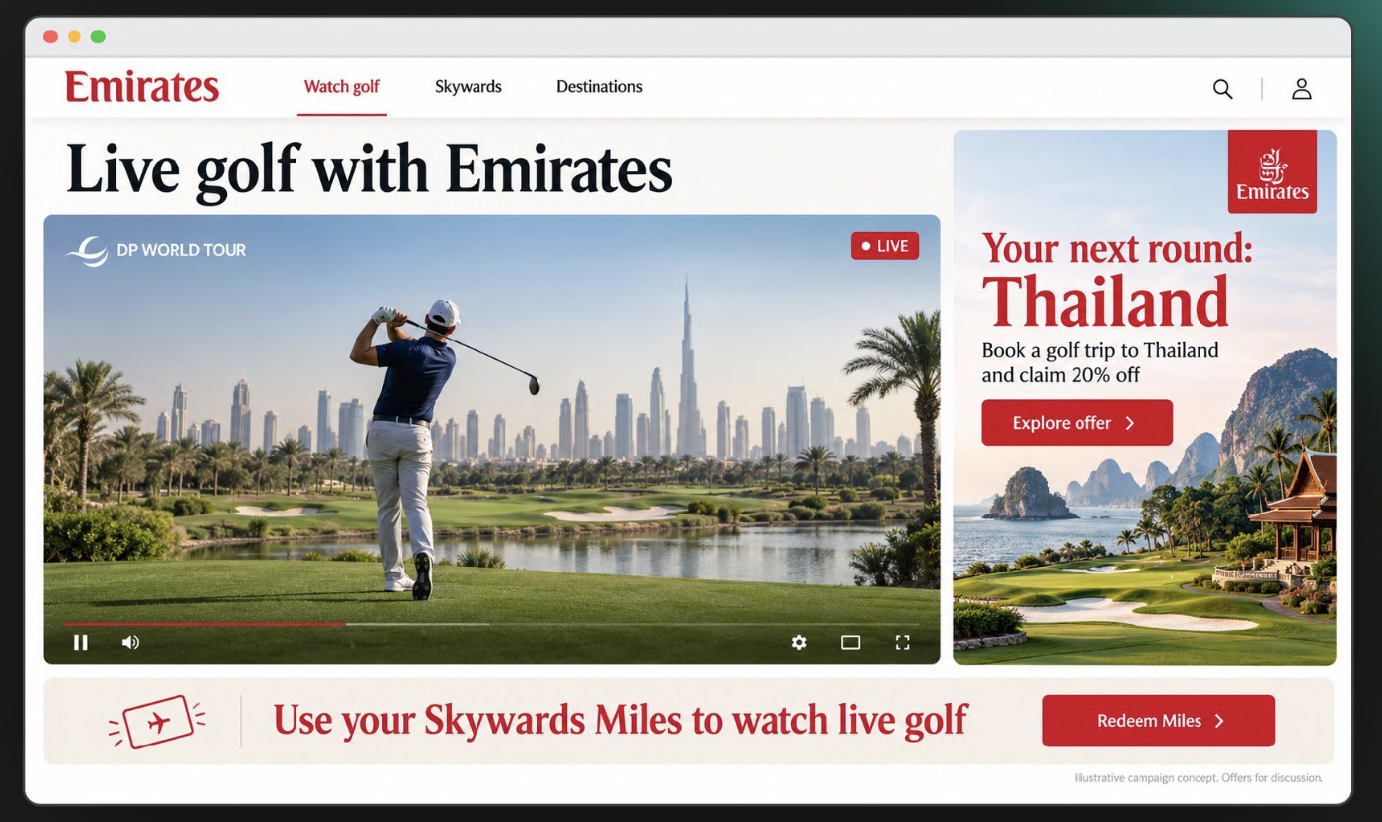
The rights owner earns from authorised distribution. The golfer helps generate demand. The brand provides a customer benefit and connects the experience to its own commercial objectives.
Sponsorship can extend beyond visibility around content into providing access to the content itself.
A purchase, loyalty redemption or permissioned marketing relationship can become the basis of that exchange. The brand can define what it wants to achieve and assess the resulting customer activity.
A sports retailer could include access to a team’s matches with a shirt purchase, or fund a single match in exchange for a marketing opt-in. Content access becomes part of the customer offer.
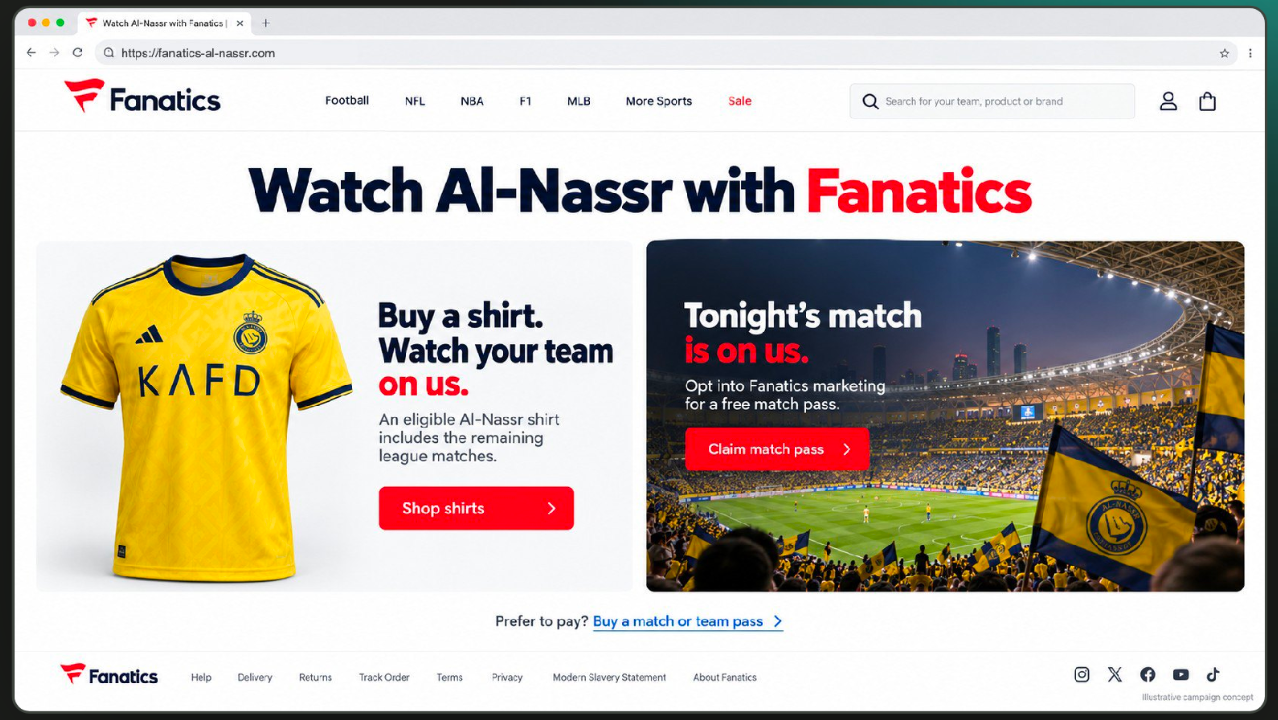
Creators, athletes and other talent can help audiences discover these experiences. They can be paid upfront as part of an influencer campaign, earn a share of the revenue they generate in real time, or do both. Brands can also invite existing customers through the channels they already use to reach them.
The Economics Need to Travel With the Content
For this model to work, ownership and commercial control must survive distribution.
The content owner decides where and when their content is available, what it costs and who earns a share. Each partner needs to know what they can offer and how they’ll earn. The audience needs an easy way to watch.
The terms can vary by market, channel or partner. It should be easy for the content owner to set those terms and know they’ll apply wherever someone gets access.
That’s what we built Recast to do.
You can launch a channel on your own domain, and your partners can launch theirs on their own domains. You can offer your own content, authorised content from partners or both. You set the terms for how your content travels across the network, and your partners set the terms for theirs.
On each transaction, Recast applies the agreed terms and automatically splits and settles the revenue after applicable taxes and fees.
As AI makes content easier to produce, more of it will compete for the same attention on social media platforms. Use the reach you have now to build direct customer relationships and put your distribution network to work before it gets even harder to reach the people who already follow you.
You’ve built the audience. You make the content. You have the network.
Now build the business on your own terms.